The potato is probably the most underestimated ingredient in the home kitchen. Who hasn’t used one without much thought — peeled it, cut it, tossed it in the pot — and been frustrated with the result? A mash that turned to glue, a roasted potato that came out soggy, fries that soaked up oil. The problem, almost always, isn’t the recipe. It’s the wrong choice of tuber.
Understanding potatoes means understanding starch. The texture each variety delivers on the plate depends directly on the concentration and behavior of the starch molecules inside its cells. That’s the key distinction between a cook who “follows a recipe” and one who truly commands the ingredient.
This article breaks down the potato — literally at the molecular level — so you always know which variety to choose, what happens during cooking, and how to get the best out of each preparation method.
An 8,000-Year History in the Mountains
The potato is not European, even though it’s hard to imagine the cuisines of Ireland, Germany, or France without it. Archaeological and genetic evidence indicates that its domestication occurred between 8,000 and 5,000 BC in the southern regions of Peru and northwestern Bolivia, in the highlands around Lake Titicaca, at about 3,800 meters above sea level.
The communities living in those harsh conditions selected and cultivated wild potato species across generations, developing at least 5,000 distinct varieties that are still grown in the Andes today. Andean peoples didn’t just eat the potato — it was central to religious ceremonies and was even used as a unit of time: some ancient civilizations measured time by how long it took a potato to cook.
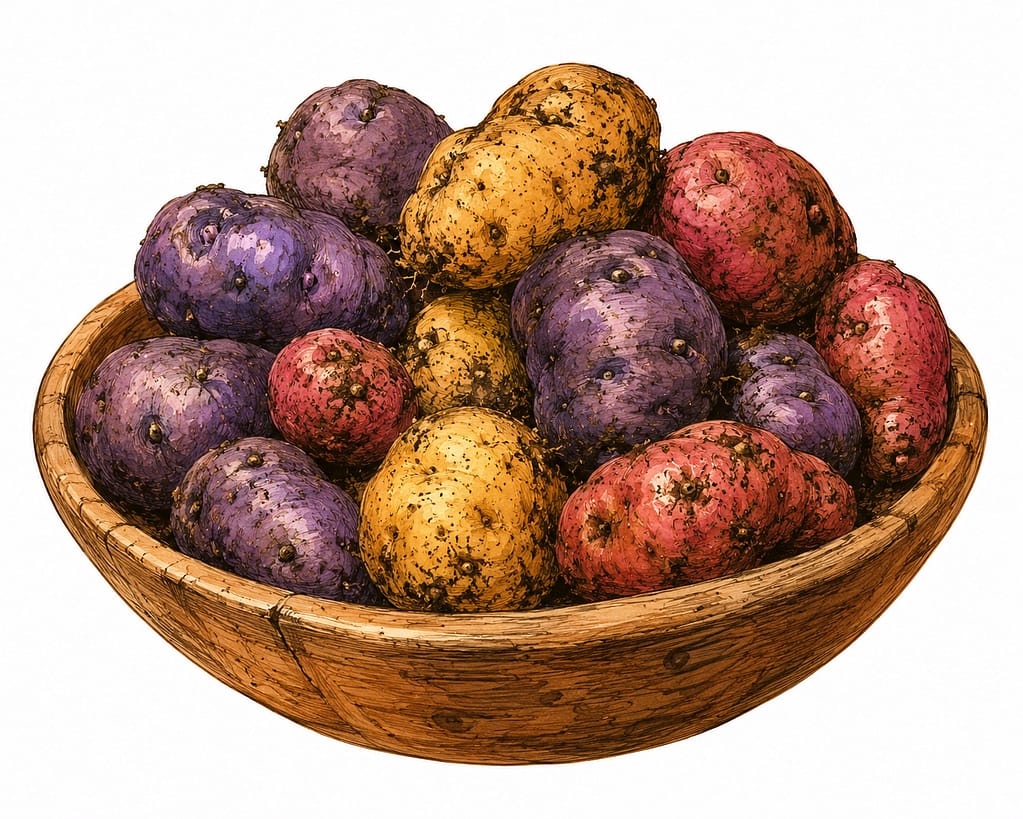
The arrival of Spanish conquistadors in the 16th century opened a new chapter in the potato’s history, bringing it to Europe. The reception was cold: Europeans were suspicious of the tuber and initially used it mainly as animal feed. Only centuries later would it become the staple food we know today — one that now feeds billions of people across every continent.
The Science of Starch: Why Variety Matters So Much
Every potato contains starch. The difference lies in how much starch it has and how that starch behaves under heat.
Starch is the potato’s primary carbohydrate, made up of microscopic granules inside the tuber’s cells. The concentration and structure of those granules determine texture after cooking.
Potato starch is predominantly composed of two types of molecules: amylose and amylopectin. Amylose, a linear polymer, tends to form gels and create a firmer texture when cooked. Amylopectin, with its branched structure, results in a waxier, moister, and stickier consistency.
When a potato is heated in water, a process called starch gelatinization occurs. Starting at around 56°C to 66°C, water is gradually absorbed by the starch granules, which swell and form a viscous gel. It’s this process that transforms a raw, hard potato into something soft and edible.
When a high-starch potato cooks, the cellular starch absorbs moisture and expands, pushing the cells apart from one another. The resulting texture is light, fluffy, and slightly dry. If a potato has less starch, the cells don’t separate in the same way, and the pieces hold their shape and firm texture after cooking.
The Three Starch Categories
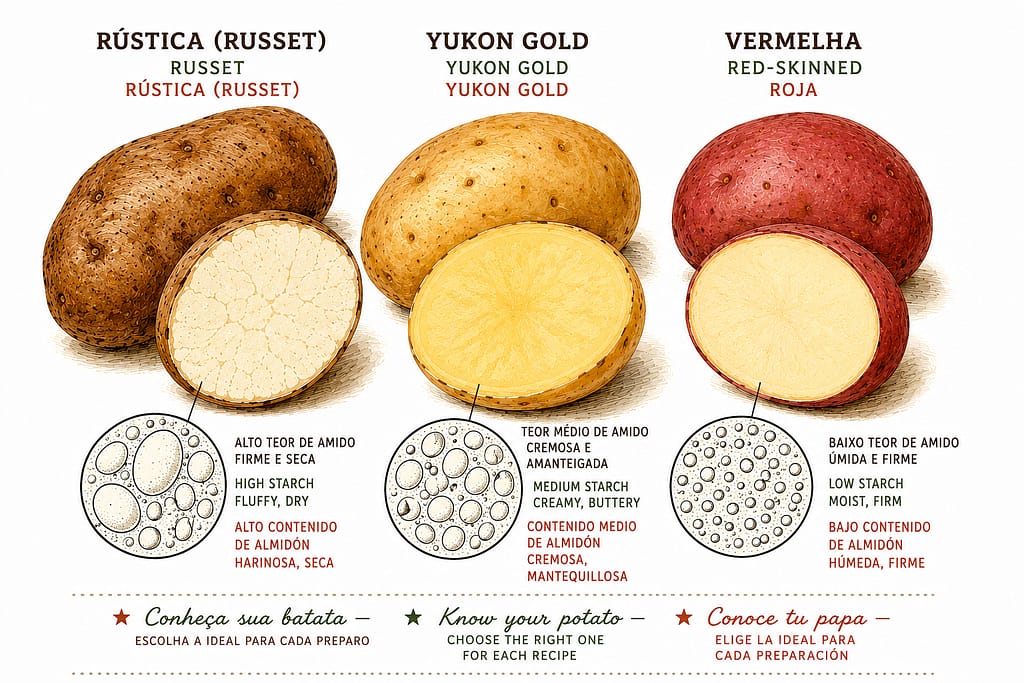
The culinary industry classifies potatoes into three groups based on starch content¹:
Starchy potatoes (high starch): such as Asterix and Russet. They contain at least 20% starch by weight, resulting in a dry, fluffy texture after cooking. They’re ideal for mash, whole baked potatoes, and frying — their easily crumbling structure absorbs fats and seasonings well.
All-purpose potatoes (medium starch): such as Yukon Gold and Monalisa. Their texture falls between starchy and waxy, making them versatile — they work well in mash, gratins, soups, and roasts. They’re the safest choice when a recipe doesn’t specify a variety.
Waxy potatoes (low starch): such as Red Bliss and fingerlings. They have a higher moisture content and a denser, creamier texture. Because their cells remain intact during cooking, they hold their shape — making them the preferred choice for potato salads, boiled dishes, and stews.
What Happens in the Pan and the Oven: The Maillard Reaction
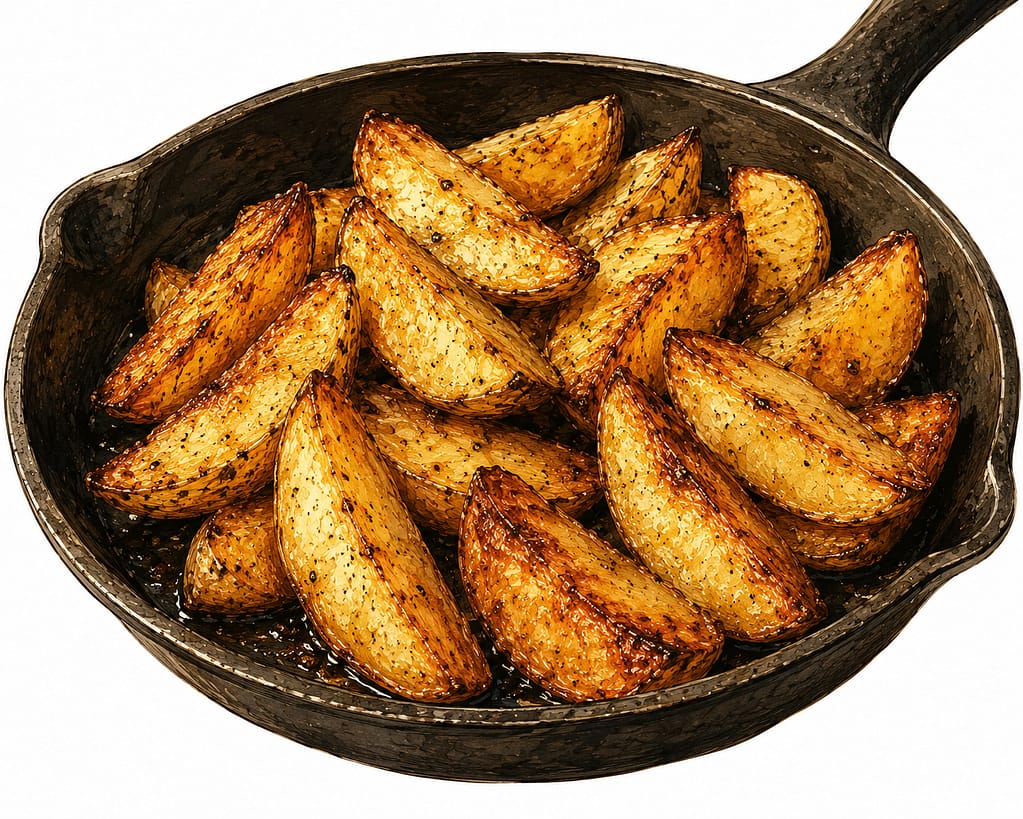
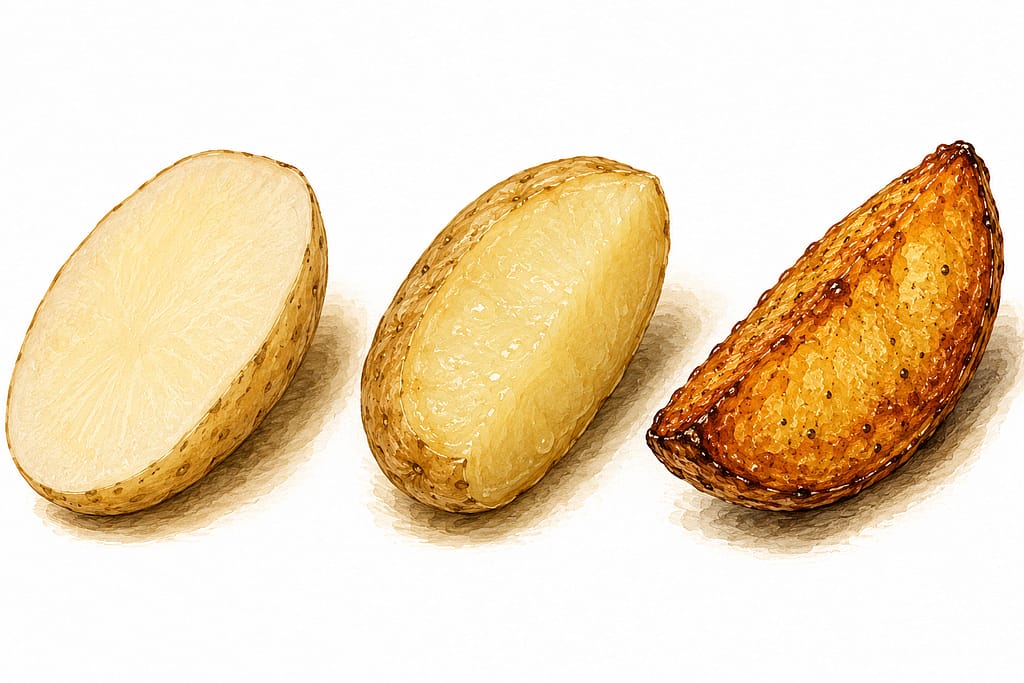
Boiling a potato is only part of the story. What transforms a pale, boiled potato into something golden, crispy, and complex is the Maillard reaction — a chemical phenomenon that occurs when proteins and reducing sugars are exposed to dry heat.
The reaction, first described in 1912 by French chemist Louis-Camille Maillard, is a form of non-enzymatic browning that produces characteristic color, aroma, and flavor. It typically begins at around 140°C and intensifies at higher temperatures.
A roasted potato, for example, undergoes the Maillard reaction because this dry-heat cooking method involves high temperatures that trigger chemical reactions and accelerate the evaporation of water. In potatoes, carbohydrates supply the necessary sugars for the reaction, while amino acids present in the cells provide the protein component — and since the reaction only occurs at the surface, that’s where the characteristic toasted flavor concentrates.
To roast potatoes with a crispy crust and fluffy interior, oven temperature is critical. The ideal range is between 200°C and 220°C, where the Maillard reaction is activated while the starches fully gelatinize on the inside.
The Two-Stage Fry
For fries with a crust that shatters and a creamy interior — the standard of good restaurants — the secret lies in double cooking. In the first fry, the oil sits at around 150°C for 5 to 7 minutes: the potatoes become soft but still pale, without any golden color. After cooling completely, a second fry at high temperature finishes the browning process.
Soaking the potatoes in cold water before frying also makes a difference: leaving them to soak removes excess starch from the surface, which makes the potatoes crispier on the outside and creamier on the inside after frying, and prevents the pieces from sticking together.
How to Choose and Store
Not every potato at the market is at its best. A few practical criteria:
- Firmness: a good potato should be hard to the touch. Any softness indicates moisture loss or the beginning of deterioration.
- Smooth skin, no sprouts: sprouts indicate the potato is old and has begun converting starch into sugar — which alters both flavor and behavior during cooking.
- No green patches: green discoloration indicates the presence of solanine, a toxic glycoalkaloid produced when the potato is exposed to light. [Inference without confirmed source for safe consumption thresholds; it is recommended to discard green parts as a precaution.]
- Correct storage: keep in a cool, dark, well-ventilated place — never in the refrigerator. Temperatures below 10°C convert starch into sugar, which causes potatoes to darken excessively during frying.
Recipe Example: Crispy-Skinned Roasted Potatoes
This recipe applies the principles of gelatinization and the Maillard reaction in a simple preparation that works as a side dish for any meal.
Ingredients (serves 4):
- 600 g starchy potatoes (Asterix or Russet), cut into 3 cm cubes
- 3 tablespoons olive oil
- 1 teaspoon salt
- 1 teaspoon smoked paprika
- Black pepper to taste
Method:
- Preheat the oven to 220°C with the roasting pan inside.
- Cook the potatoes in salted water for 8 minutes — they should be soft on the outside but still firm in the center.
- Drain and shake vigorously in the pan for 30 seconds: this creates a rough surface that maximizes contact with the oil and the browning area.
- Toss with olive oil, paprika, and pepper.
- Spread on the hot roasting pan (contact with the hot surface already begins the Maillard reaction).
- Roast for 35 to 40 minutes, turning once halfway through, until evenly golden.
Practical Tips
- Match the type to the method: waxy potatoes for boiled dishes and salads; starchy ones for mash, roasts, and fries; all-purpose for gratins and soups.
- Dry before roasting or frying: surface moisture inhibits the Maillard reaction and results in a soggy potato. Paper towels or a few minutes in a low oven will solve the problem.
- Salt the cooking water: salt penetrates the potato during par-cooking, seasoning it from the inside — not just on the surface.
- Never mash potatoes in a stand mixer: the mechanical heat breaks down the cells and releases excess starch, turning the mash into glue. Use a ricer or a fine sieve instead.
- Store raw, never overcooked: if par-cooking before roasting, stop at al dente. A fully cooked potato that’s then roasted loses structure and won’t develop a crispy crust.
Sources
- TALBURT, W. F. Potato Processing. 4th ed. AVI Publishing, 1987. Referenced in: RAVI, R. et al. Some properties of potatoes and their starches: cooking, textural and rheological properties. Food Chemistry, 2002. Available at: https://www.sciencedirect.com/science/article/abs/pii/S0308814602001292
- BIOLOGY INSIGHTS. Potato Starch Content: Varieties, Cooking, and Health. 2024. Available at: https://biologyinsights.com/potato-starch-content-varieties-cooking-and-health/
- AMERICA’S TEST KITCHEN. The Starchy Secrets to Cooking Potatoes. Available at: https://www.americastestkitchen.com/articles/4277-the-starchy-secrets-to-cooking-potatoes
- INSTITUTE OF CULINARY EDUCATION (ICE). 3 Types of Potatoes (Plus Recipes and the Science Behind Potato Starch). Available at: https://www.ice.edu/blog/types-of-potato-starch-science
- POTATOES USA. Potato History and Origin. Available at: https://potatogoodness.com/potato-fun-facts-history/
- POTATOPRO. History of the Potato: Domestication and Early Cultivation. Available at: https://www.potatopro.com/about/history-potato
- UN TODAY. The potato: a journey through time, cultures, and challenges. 2024. Available at: https://untoday.org/the-potato-a-journey-through-time-cultures-and-challenges/
- ILLINOIS EXTENSION. Maillard Reactions Change the Tastes of Your Food. 2021. Available at: https://extension.illinois.edu/blogs/simply-nutritious-quick-and-delicious/2021-11-19-maillard-reactions-change-tastes-your-food
- CULINARY ARTS SWITZERLAND. What Is the Maillard Reaction? The Science of Flavor. Available at: https://www.culinaryartsswitzerland.com/en/news/maillard-reaction/
- COZINHA TÉCNICA. É batata! 2014. Available at: https://cozinhatecnica.com/2014/09/e-batata/
- WIKIPEDIA. Maillard Reaction. Available at: https://en.wikipedia.org/wiki/Maillard_reaction